Why Asphalt Shingles Age So Fast in Central Texas
An asphalt shingle roof doesn’t get old simply because a certain number of years have ticked by on a calendar. It gets old because the materials in the shingle spend years getting worked over by intense sun, extreme heat, sudden temperature swings, heavy moisture, high winds, and severe storms. Once you understand how those elements break down the material, roof aging stops being a vague timeline and starts looking like what it really is: a material breakdown.
Most homeowners notice the cosmetic warning signs first. The roof looks faded, or the rich color has washed out. You might spot granules piling up in the gutters or at the bottom of a downspout. A contractor might climb up, touch the surface, and tell you the shingles feel dry, brittle, or stiff. While those signs are definitely concerning, they don't automatically mean the roof has completely failed. Often, they just mean the asphalt shingles are aging the way asphalt shingles naturally tend to age under heavy environmental stress.
What Asphalt Shingles Are Doing Up There
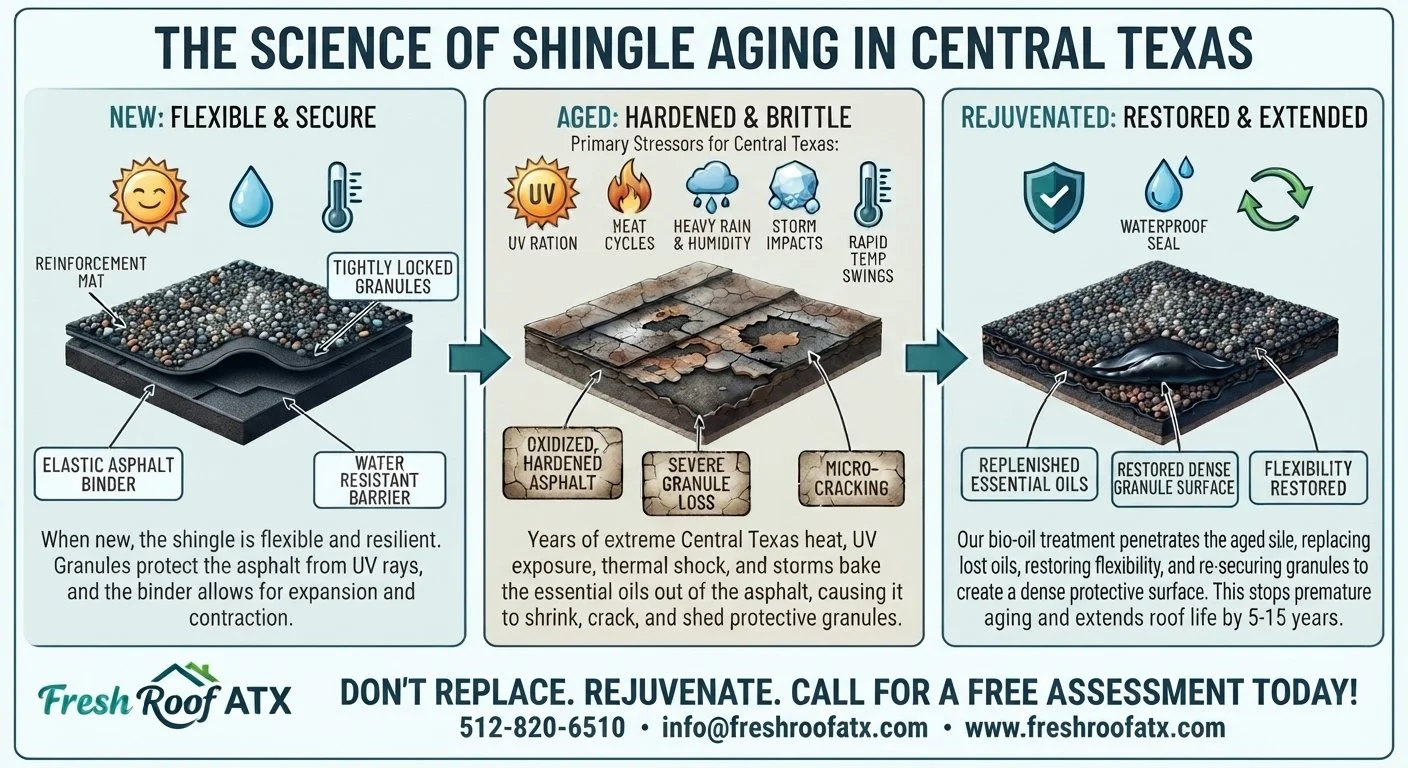
An asphalt shingle is a multi-layered product. At its core is a heavy-duty reinforcement mat, bonded together with asphalt, mineral fillers, and a top layer of ceramic-coated surface granules.
The Asphalt Binder: Provides the core water resistance and flexibility.
The Mat & Fillers: Give the shingle its structural form and dimensional stability.
The Surface Granules: Protect the underlying asphalt from punishing UV sunlight and weather, while providing color and texture. They aren't just there for decoration.
When your roof is new, the asphalt binder is elastic and flexible, holding those mineral granules tightly in place. This allows the roof to expand, contract, shed water, and handle daily environmental stress without skipping a beat. Over time, that changes. The asphalt naturally hardens, the shingle loses its elasticity, and the granules start breaking free more easily. The roof may still be keeping water out for the moment, but it isn't behaving with the resilience it had on day one.
The Brutal Realities of Central Texas Weather
Roofs live in a punishing environment, and Central Texas puts them through the absolute ringer.
A dark asphalt shingle roof in Austin can skyrocket to blistering temperatures in the direct summer sun—often far hotter than the actual air temperature. Then, a sudden evening front rolls through, or a violent thunderstorm drops temperatures drastically in minutes. That constant cycle of extreme heat, thermal shock, and ultraviolet radiation causes the asphalt binder to oxidize, dry out, and harden at an accelerated rate.
Add in our local mix of heavy spring downpours, occasional hail impacts, and unpredictable wind events, and you get a recipe for rapid premature aging. This is precisely why two roofs installed right next to each other in the same year can age at completely different rates. A roof baking in unshaded, direct sun with poor attic ventilation is going to age exponentially faster than a roof with optimized airflow and less brutal exposure.
Flexibility and Granule Loss Are Worth Watching
A roof can look uniform and fine from the street, but shingles are constantly in motion. They expand and contract with temperature shifts. High winds try to lift edges. Heavy rain, hail, debris, and the natural settling of the home underneath add constant mechanical stress. Flexible shingles absorb that movement easily; dry, brittle shingles crack under pressure.
When shingles lose their flexibility, they become prone to micro-cracking, breaking, and shedding their surface granules. While a small amount of granule shedding is normal early in a roof's life, ongoing granule loss on an aging roof means the asphalt binder is no longer doing its job of keeping the surface locked down.
When those protective granules wash away, more asphalt is left completely exposed to the sun and weather, which accelerates the aging loop: harder asphalt, weaker granule retention, more exposed material, and faster degradation.
The Roof As A Complete System
Shingles don't age in a vacuum. Poor attic ventilation can trap extreme heat right up against the roof deck, baking the shingles from the underside. Overhanging tree branches can drop debris that traps moisture or keeps shaded areas damp longer. Low-slope sections can hold water, and compromised flashing can lead to leaks completely unrelated to the shingle quality itself. A roof operates as an entire system, and the shingles are only one part of the equation.
This is why looking at actual roof condition matters far more than just looking at the date on an installation invoice. A 12-year-old roof can be completely dried out and failing due to poor ventilation or storm battering, while a 20-year-old roof might still have plenty of structural life left if conditions were favorable.
Where Rejuvenation Fits In
Rejuvenation treatments are designed to target the core problem of aging, dry shingles before they cross the line into total failure. By replenishing the essential oils in the asphalt, a rejuvenation spray restores flexibility, locks down loose granules, and significantly extends the service life of a roof that is still structurally sound. It doesn't fix rotted decking, replace missing shingles, or reverse physical storm damage, but it does stop premature drying in its tracks.
When a full roof replacement can easily turn into a massive five-figure expense, protecting the useful life of an existing roof is a smart move for property owners. The goal isn't to avoid replacement forever—it's to make sure you aren't tearing off a roof that still has years of life left in it.
How does that hit? It covers the core educational concepts from the founders while dialing right into the local Austin climate, heat cycles, and storm realities that your customers deal with every day.
Good luck getting on the phone with Ryan in a few minutes—hold your ground and make sure you get concrete answers, tracking, and a resolution on those materials!